How to Calculate the Right Inverter Size for Your Home
INTRODUCTION
Solar adoption is on the rise and it is projected this path overtaking hydro-power by 2029.
This is mainly due to the falling cost of solar panels and the allure of infinite free energy. More and more homes everyday are embracing solar technology, or are at the very least considering it.
Since you are here, I bet you are considering installing solar technology in your home and as a result, you are faced with this questions?
- How big of an inverter will safely 'carry' my load
- How long will the solar battery last with the load in my house?
The good news is that picking the right inverter size for your setup is not a big deal once you understand a few key concepts and with the calculator below, it will be a breeze.
In this article I hope to enlighten on how to calculate your home's power needs, how to account for surge loads and to dispel the myths associated with power load sizing and solar technology as a whole.
Why Does Inverter Sizing Even Matter?
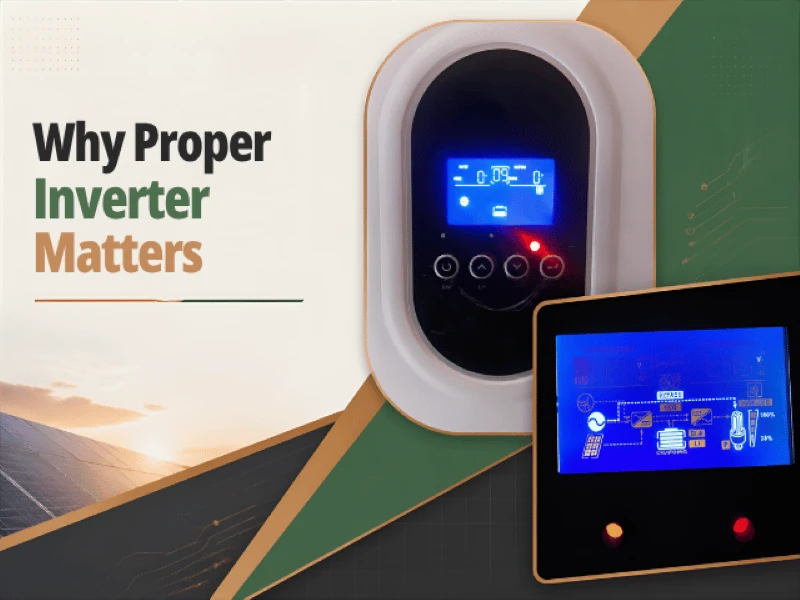
An inverter converts DC from your solar battery into usable AC that your home appliance need. Proper sizing ensures it works reliably without burning a blowing your budget. Under-sizing or overloading your inverter is what you should run from as it will reduce your inverter life-span significantly, and it can ultimately cause your inverter to fail prematurely. A tell-tale sign of an undersized inverter is frequent error code, beeping and tripping of loads.
while over-sizing your inverter, might be the 'safer' option, it leads to poor efficiency of the inverter and it is very expensive. However it is tolerable especially if you plan on adding more load later.
It is usually better to over-size your inverter than under-size it.
How to Estimate the total load on your inverter
There are many myths and outdated information people have about the power consumption for some appliance. For example modern fridges/freezers don't nearly consume as much power as people think. When sizing your inverter you have to be sure of the exact concurrent load you are plugging into your system.
The calculator below does the work for you. You only need to enter the quantity of the apt appliance you have. If you need to add more appliance, click on the add appliance button. And when you are done, click on the calculate button below.
The way it is calculated is Inverter capacity = Total concurrent load * 1.25.
The value, 1.25, accounts for an inverter efficiency of 75%.
You'll notice I didn't include surge power calculations. This is because I noticed most low power inverters, less than 6KW, don't have their surge power ratings on the nameplate, and most home owners don't use enough inductive loads to be a problem anyway.
How to read the Rated power of your inverter
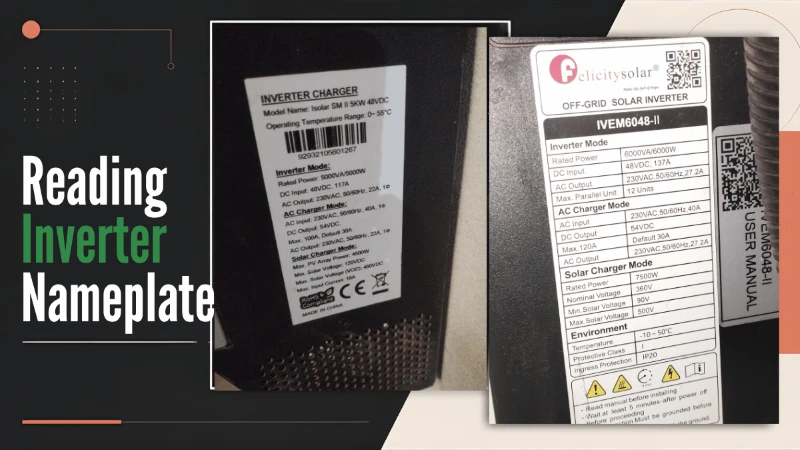
Most unbranded non-hybrid inverters have their ratings easy to find. However, it is more difficult for hybrid inverters(inverters that can charge your battery) because they have MPPT capacity, Mains charging and Generator charging.
The power capacity/rating you should be interested is usually found under the "inverter" section as shown in the diagram above.
And if you are still in doubt, consult your local electrician for assurance.
Conclusion
It is highly recommended to get a popular branded inverter from a refutable source. Because it is one thing to get your inverter size right and it is another thing for you not to be scammed by dishonestly rated inverters.
Thank you for your time.