Which Solar Battery is Best?
I am an Electrical Engineer with over 15 years of experience, including 6 years in solar installation. I currently work at MPNG, a $100M tech start-up. Having deployed solar systems across the country, I created this blog to provide clear, honest, engineer-grade advice, cutting through the marketing noise.
Dear people, I've been there. We want to make sure we are getting the best value for our setup without spending more money than necessary. The best battery for you depends on your budget and the particular problem you are trying to solve with the battery.
Before we proceed, we must define two terms as we will be using them in this article.
DOD (Depth of Discharge) represents the percentage of the battery's capacity that users have utilised. For instance, if a battery completely runs down, it uses 100% of its capacity, meaning 100% DOD.
Cycle Life is the number of complete charge-discharge cycles a battery can undergo before it loses 80% of its original capacity.
There are two main types of battery technologies:
Lead-Acid Batteries (The Cheapest Option)
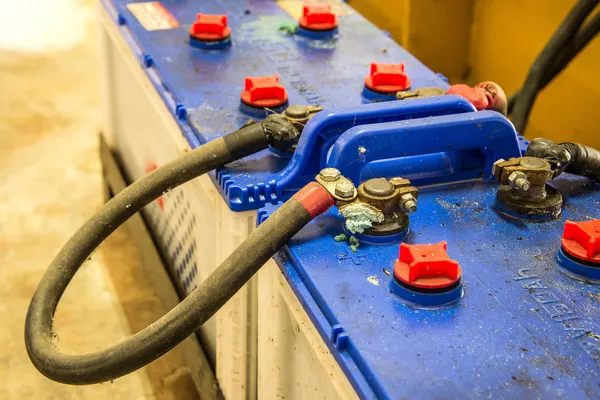
Lead-acid battery is the oldest rechargeable battery technology in the world. It is the traditional choice, the default option because of its low cost. They are usually heavy and have toxic acid in them. It's the type of battery found in cars (car battery) and all those olden days rechargeable lamps. Since the battery is the oldest technology, it has had time to evolve. There are three main types of lead-acid batteries:
Flooded Lead-Acid (FLA)
These are the ones that have acid flowing in them. Because of evaporation and gassing, they need periodic topping up with distilled water. They are for sure the cheapest option; however, the fact that they need maintenance is a turn-off for most solar setups.
Sealed Lead-Acid (SLA)
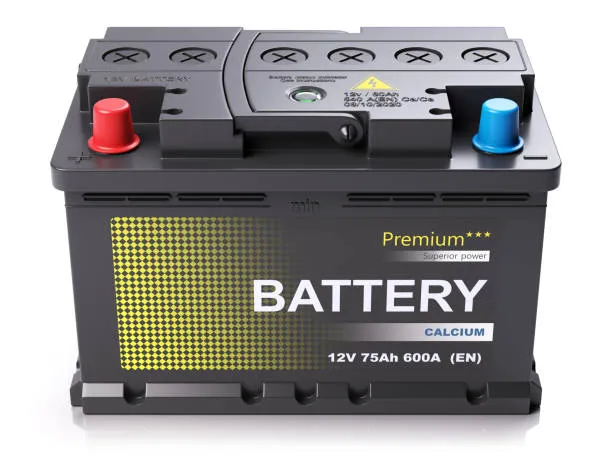
These are the sealed alternatives; hence they are completely maintenance-free. There are 3 major types:
- AGM (Absorbent Glass Mat): AGM batteries are the most popular of Sealed Lead-Acid batteries due to their low cost and zero maintenance. They can provide reliable performance when the installation is done correctly. Their lifecycle depends on the DOD. To get the best out of them, it is recommended that they are not drained consistently below 50% DOD. And at 50% DOD you can get 500-800 cycles.
- Gel : Gel batteries are better at charging speeds, and they handle deeper discharges better. However they are more sensitive to overcharging and high temperatures. They are also more expensive.
Tubular
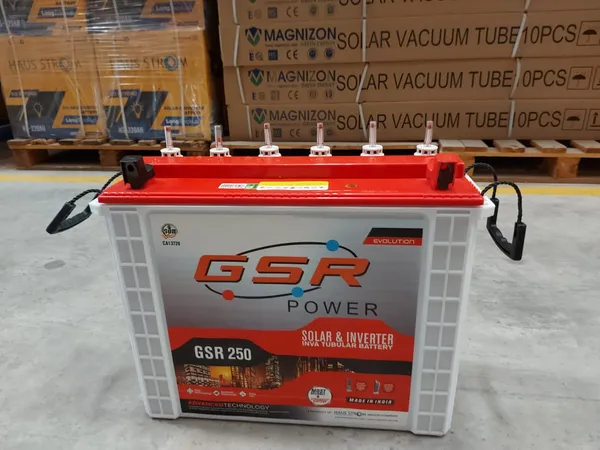
These batteries stand out because they have tubular (or cylindrical) plates. This design makes them more durable for deep cycling compared to other types of Lead-Acid batteries.
They are very popular for solar off-grid systems and inverter backup in Africa and India. They are way more tolerant of deep cycle discharges though it's still recommended that the DOD be kept at 50% for the best lifespan. At it's recommended DOD you can get over 1,000 - 1,800 cycles . They are highly popular in areas with frequent power outages due to their ability to endure daily, heavy cyclic loads for 5 to 8 years.
Lithium-Ion Batteries (The Modern Option)
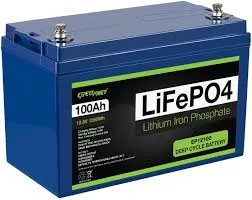
Lithium-ion batteries are the top choice for solar installations at homes and businesses. They offer high efficiency, a compact size, and a long lifespan. The most popular type today is Lithium Iron Phosphate (LiFePO4 or LFP). It’s the top choice for solar systems. This is because they are highly stable, meaning they do not catch fire easily. They also last for 4,000 to over 6,000 cycles.
Choosing the Right Battery for Your Solar System
For you to understand how to what battery technology is best for your setup, I want you to consider the scenario below:
Suppose you operate a laptop in a region where there is nearly constant power, the laptop is always plugged in. You'll find out that the laptop battery will rarely die past 80% (DOD of 80%) because it is topped-up again. The battery becomes more like an emergency backup for intermittent use and you rely less on it. FLA and SLA batteries perfectly fit this role.
In a region with steady power, where the depth of discharge (DOD) is about 50%-60%, lithium and tubular batteries excel. They handle deep discharges better.
If you frequently drain your batteries to 0% because of your mains supply or solar output, a Lithium LIFEPO4 battery is the best choice. They can handle being at 0% for a long time without degrading.
Another thing to consider is that the optimal state of charge (SoC) of a lead-acid battery is 100%, meaning that a Lead-acid cell must full at all times to get the best out of it. The moment it is discharged, it starts degrading and if it is left in that state for long it will start to permanently lose capacity.
And also, lead-acid batteries generally weigh as much as 3 to 4 times that of a LiFeP04 battery of the same capacity.
Final thoughts
Lithium (LiFEPO4) battery is the best option for almost all setups. Especially if you expect to drain your batteries often and you rely on them more.
Tubular batteries are the second best option if you cannot afford Lithium batteries. I'd generally advise you to avoid SLA and FLA batteries. They don't perform well when much is required of them; they charge slowly and they are heavy. Incomplete charging and frequent deep discharging can make them lose capacity, even worse, get permanently bad.
If you are concerned about your solar panels catching fire, click here to read my article on that.